
ToF 3D Sensors Driving Smart Manufacturing Robotic Vision & Industry
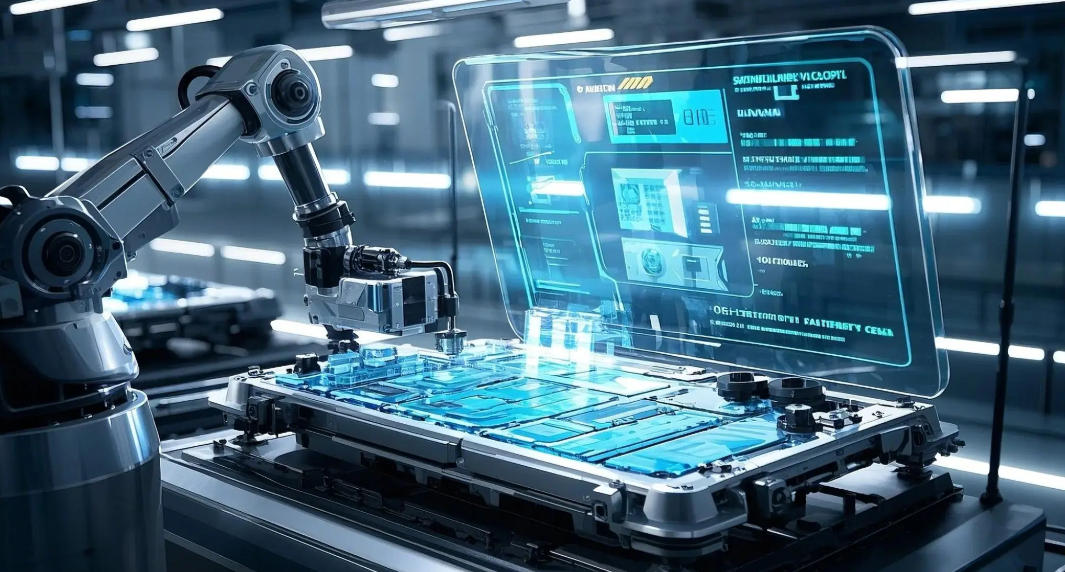
How Do ToF 3D Sensors Improve Smart Manufacturing and Robotic Vision in Industry 4.0
With the rise of Industry 4.0 and smart manufacturing, traditional production models are rapidly being replaced by automation, digitization, and intelligence. Manufacturing enterprises and automated factories increasingly require advanced vision perception capabilities, especially in scenarios such as high-precision assembly, unmanned warehousing, intelligent logistics, robotic vision, and automated inspection. These applications demand high levels of spatial awareness, speed, and stability. In this context, Time-of-Flight (ToF) 3D sensors have become a key technology supporting next-generation smart factories and industrial robots.
What Is Smart Manufacturing
Smart manufacturing refers to the use of advanced sensor technology, artificial intelligence, the Internet of Things, big data analysis, and automated equipment to monitor, analyze, and optimize production in real time. It aims to improve production efficiency, product quality, and flexible manufacturing capabilities. In other words, smart manufacturing is “machine connectivity plus data-driven automated optimization,” enabling factories to complete production tasks faster, more flexibly, and more precisely while reducing costs and energy consumption.
As manufacturing demands for flexibility and precision rise, traditional mechanical automation and 2D vision systems are no longer sufficient. At this point, ToF 3D depth sensing, 3D ToF camera modules, and ToF depth sensors provide new possibilities for industrial robots and automated systems.

1. Growing Demand for Vision Perception in Industry 4.0
In the Industry 4.0 framework, production lines are evolving from traditional automation to highly intelligent systems, increasing requirements for visual perception. Industrial robots, intelligent logistics systems, and automated assembly lines increasingly rely on 3D sensing technologies, especially ToF 3D camera modules and 3D ToF sensors, to achieve higher efficiency, precision, and safety in assembly, quality inspection, handling, and warehousing.
By integrating 3D ToF modules and ToF depth cameras, industrial robots can acquire precise three-dimensional spatial information and perform key functions such as:
-
High-precision object detection and positioning — ToF 3D sensors provide millimeter-level distance measurement on high-speed production lines, supporting precise part picking, assembly, and sorting, improving efficiency and accuracy.
-
Real-time obstacle avoidance and path planning — ToF 3D depth cameras scan the workshop or warehouse environment, allowing robots to identify obstacles quickly and dynamically plan motion paths, ensuring safety and continuous operation.
-
Automated quality inspection and assembly — Using 3D depth maps and high-resolution ToF modules, systems can detect part size deviations, surface defects, and assembly errors for high-precision automated quality control.
Compared with traditional 2D or RGB image sensors, ToF depth sensors maintain stable and reliable performance in industrial environments with dust, strong light, reflective surfaces, or complex lighting conditions.
Additionally, 3D ToF modules feature fast response, low latency, and wide field of view, allowing seamless integration with AI algorithms and edge computing systems to enable:
-
Intelligent dynamic monitoring — Real-time analysis of production line object movement and prediction of potential collision risks.
-
Multi-robot collaboration — Sharing ToF depth data among robots ensures safe distances and efficient coordination.
-
Data-driven production optimization — Combining industrial big data and digital twin technology to optimize workflows and resource allocation.
In Industry 4.0, vision perception emphasizes high-precision three-dimensional depth sensing, stability, and intelligent analysis. ToF 3D sensors and 3D ToF camera modules, with their anti-interference, real-time, high-precision, and modular characteristics, are becoming the core pillars of smart manufacturing and robotic vision systems.
2. Core Industrial Applications of ToF
In the process of smart manufacturing transformation, ToF sensors and 3D ToF camera modules are widely used in industrial robots, assembly lines, unmanned warehousing, and logistics systems, providing real-time, stable, and high-precision data for production and decision-making.
Robot Navigation and Path Planning
Using 3D ToF cameras and ToF ranging sensors, systems can scan the workshop environment in real time to generate high-precision 3D depth maps, providing robots with accurate spatial awareness. Combined with AI vision systems and edge computing, industrial robots can:
-
Accurately avoid obstacles and plan dynamic paths — Robots can identify obstacles, personnel, and moving devices in real time and automatically adjust trajectories to ensure safe and efficient operation.
-
Multi-robot collaboration and safety distance management — ToF sensors provide millimeter-level distance measurement between robots, ensuring coordinated operation and reducing collision risks.
-
AGV and autonomous transport vehicle monitoring and scheduling — ToF 3D cameras and modules enable automated guided vehicles to perceive their environment, plan paths, avoid obstacles, and optimize warehouse logistics efficiency.
Industrial-grade ToF solutions excel in measurement range, depth resolution, power consumption, and high-frequency scanning stability, making them suitable for continuous operation in factories and warehouses.
Assembly Line Inspection and Quality Control
In modern smart factories, 3D ToF sensor modules are widely used for assembly line inspection and automated quality control, including:
-
Assembly precision verification — High-resolution ToF depth cameras detect part position, size, and shape in real time to ensure assembly accuracy.
-
Defect detection and anomaly recognition — Combining depth maps with AI algorithms enables automatic detection of surface cracks, dents, weld issues, and other defects, improving yield.
-
Robot picking and path optimization — 3D information optimizes robotic arm gripping posture and movement paths, avoiding mispicks or collisions and enhancing production efficiency.
ToF’s active infrared measurement method ensures stable performance even in complex conditions such as reflective surfaces, dust, strong light, or low light.
Unmanned Warehousing and Smart Logistics
Modern unmanned warehouses and smart logistics systems require automated item recognition, measurement, path planning, and scheduling. ToF 3D camera modules and sensors play an essential role by:
-
Item identification and stacking optimization — Capturing dimensions and positions for high-density stacking and automatic sorting, improving warehouse efficiency.
-
Warehouse mapping and path planning — Depth data is used to build 3D maps of warehouses to help AGVs and robots plan optimal paths and avoid obstacles.
-
Multi-AGV collaboration and intelligent scheduling — Sharing real-time ToF depth data enables coordinated operations, task allocation, and improved overall logistics efficiency.
ToF 3D sensors remain stable under low light, reflective surfaces, and dusty conditions, making them ideal for continuous operation in warehouse and logistics environments.
Thus, Time-of-Flight technology, 3D ToF sensors, and 3D ToF camera modules have become foundational for Industry 4.0 smart manufacturing, from robot navigation and assembly line inspection to unmanned warehousing and intelligent logistics.

3. Key Advantages of ToF Technology
In Industry 4.0 scenarios, ToF sensors offer significant advantages over traditional vision systems and 2D imaging:
Real-time High-Precision Depth Sensing
ToF 3D depth cameras generate high-precision depth maps within milliseconds, meeting the real-time needs of high-speed production lines, automated assembly, and dynamic logistics.
-
Provides millimeter-level distance and spatial coordinate measurement
-
Supports continuous scanning and high-frame-rate acquisition for robots and AGVs
-
Enables digital twin models for virtual factory management and optimization
Strong Anti-Interference and Environmental Adaptability
Industrial environments often include dust, strong light, reflective materials, and uneven illumination. ToF depth sensors use active infrared emission and reception to maintain stable performance under challenging conditions.
Even in extreme light or low-light conditions, ToF sensors provide reliable depth data, suitable for 24/7 industrial production and logistics.
AI Integration and Intelligent Perception
Combining ToF with AI algorithms, machine vision, and edge computing enables intelligent production systems:
-
Automated defect detection and quality control — 3D depth maps with AI detect deviations, surface defects, and assembly anomalies, improving product consistency.
-
Dynamic path optimization and multi-robot collaboration — ToF data provides the basis for coordinated robot movement and path planning.
-
Digital twin and process optimization — Real-time ToF data combined with big data and simulation platforms optimizes production processes, predicts maintenance needs, and enables intelligent management.
Modular, Low-Power, and Easy Integration
Modern 3D ToF modules are small, low-power, and easy to integrate into industrial robots, automated equipment, AGVs, PLC systems, and warehouse infrastructure. Modular and standardized design facilitates large-scale deployment and system expansion, providing flexibility and scalability.
Thus, ToF technology leads not only in performance but also in deployment cost, maintenance, and integration convenience.

4. Challenges
Despite its advantages, ToF technology faces challenges in industrial applications:
-
Complex environmental interference — Dust, smoke, reflective surfaces, and extreme temperatures may affect measurement accuracy, requiring algorithm optimization or multi-sensor fusion.
-
System integration and cost — High-precision ToF cameras combined with AI, edge computing, and robot control require careful system design, increasing complexity and cost.
-
Sensor configuration for different requirements — Varying industrial scenarios have different range, resolution, and field-of-view requirements, and incorrect selection may reduce performance or waste resources.
Therefore, ToF implementation must match actual scenarios and consider the overall system design.
5. Recommendations for Manufacturers and Integrators
To maximize the potential of ToF technology in smart manufacturing and robotic vision:
-
Select suitable ToF modules for specific industrial scenarios — Consider measurement range, resolution, FOV, power, and operating frequency.
-
Integrate with AI algorithms and edge computing platforms — Combine depth data with vision, deep learning, and edge processing for automated detection, path planning, dynamic response, and intelligent scheduling.
-
Build digital twins and real-time feedback — Use ToF data to create virtual models for monitoring, predictive maintenance, and intelligent management.
-
Adopt modular and standardized system design — Standard interfaces and modular components facilitate expansion and upgrades.
-
Optimize cost and deployment efficiency — Balance performance with cost-effectiveness to enable ToF use in small and medium-sized enterprises and flexible production lines.
Through these strategies, enterprises can apply ToF technology to achieve automated production lines, improved quality, optimized logistics, and flexible manufacturing.
6. Future Outlook: ToF + AI + Digital Twin Driving the Next Generation Smart Factory
As semiconductor, sensor, and algorithm technologies advance, ToF technology will integrate deeply with AI, edge computing, big data, and digital twins, driving industrial robots and smart factories into a truly intelligent era.
-
End-to-end intelligent management — Real-time ToF data with AI and digital twins enables monitoring, anomaly prediction, maintenance, and production optimization.
-
Multi-robot collaboration and flexible production — Robots, AGVs, and assembly lines share depth data and scheduling tasks for coordinated, flexible operations.
-
Unmanned warehousing and automated logistics — ToF combined with AGVs and AI scheduling enhances warehouse efficiency, safety, and flexibility.
-
High-precision quality control and zero-defect manufacturing — Real-time 3D vision with AI ensures product consistency and quality, improving competitiveness.
In the future, every smart factory may use ToF 3D sensors, AI, and multi-sensor fusion systems to achieve fully automated, intelligent, data-driven, and highly efficient production.
Conclusion
In the transition from traditional manufacturing to Industry 4.0 smart manufacturing, ToF 3D sensors, 3D ToF camera modules, and ToF depth sensing technology have become foundational for industrial robot vision, automated assembly, unmanned warehousing, intelligent logistics, and quality inspection. With high precision, real-time performance, anti-interference capability, modularity, and deep integration with AI and edge computing, ToF technology enables higher efficiency, better quality, greater safety, and flexibility in manufacturing.
Through proper selection, system integration, digital twin construction, and intelligent algorithm application, ToF technology will drive smart factories into a new era, transforming industrial automation into truly intelligent systems capable of perceiving, thinking, and executing.
SLAMTEC LPX-E3 25m 360° regional monitoring 2D LiDAR 64 Field Sets for robots, AGV obstacle avoidance, and regional monitoring

After-sales Support:
Our professional technical team specializing in 3D camera ranging is ready to assist you at any time. Whether you encounter any issues with your TOF camera after purchase or need clarification on TOF technology, feel free to contact us anytime. We are committed to providing high-quality technical after-sales service and user experience, ensuring your peace of mind in both shopping and using our products.






Please upload banner from store admin blog pages