
ToF Sensors Enable 3D Depth and AI Automation in Smart Homes
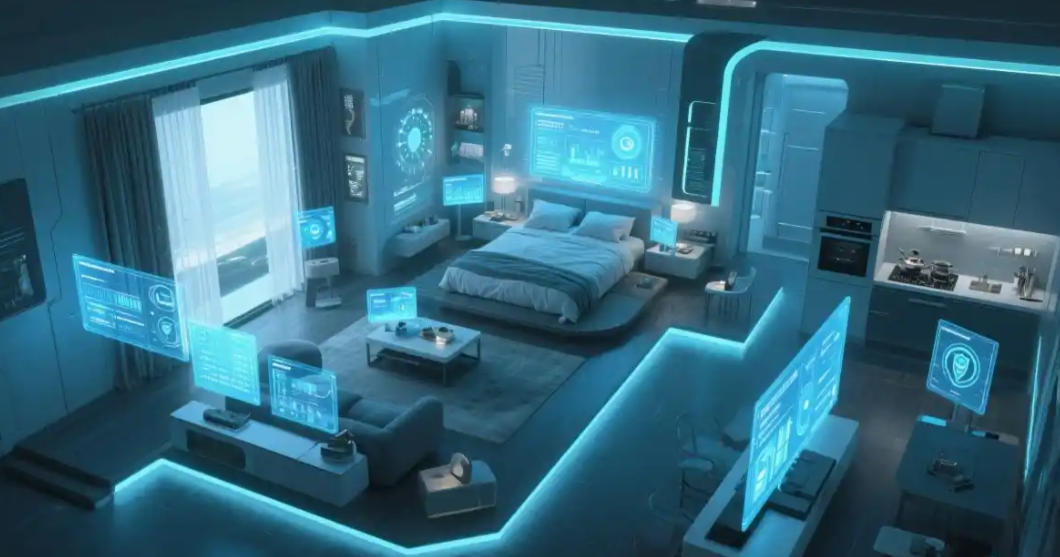
How Can ToF Sensors Improve Your Smart Home Experience
What Is a Smart Home and Why Depth Perception Matters
A smart home is a modern living environment where devices and systems — including lighting, appliances, HVAC, security cameras, curtains, and cleaning robots — are connected through the Internet of Things, artificial intelligence, and automation platforms. This allows remote control, automation scheduling, and intelligent management. Users can control devices through smartphones, tablets, voice assistants, or other smart interfaces. Common features include:
-
Smart lighting: Automatically adjusting brightness, color temperature, or hue based on time, ambient light, occupancy, or user preferences.
-
Smart security and surveillance: Real-time monitoring, motion detection, intruder alerts, door and window sensors, and alarms.
-
Smart appliances and HVAC: Refrigerators, air conditioners, washing machines, and air purifiers that respond to presence or environmental conditions.
-
Energy management: Smart thermostats, occupancy-based lighting, and automated shutdown of idle devices to save energy.
Traditional 2D sensors or basic infrared and motion detectors often lack spatial awareness. They struggle to determine the precise location of people or objects, count the number of people, track movement paths, or recognize gestures accurately, especially in low light, shadowed areas, or complex indoor scenes.
Time-of-Flight (ToF) 3D depth sensors address these limitations by providing per-pixel depth information, capturing not only X and Y coordinates but also the Z-axis distance. This enables precise spatial modeling of the home environment.
ToF technology allows smart homes to become fully aware of space, presence, movement, and context in ways that flat 2D systems cannot achieve.

Key ToF Applications in Smart Homes
-
Gesture Control and Touchless Operation
With ToF depth sensors and 3D imaging modules, smart home systems can accurately capture hand gestures, positions, and movement trajectories. Televisions, air conditioners, lights, and curtains can be controlled without touching or speaking, making interaction more convenient and hygienic. Compared to traditional infrared gesture sensors or ordinary cameras, ToF offers faster response, higher depth accuracy, and stable performance in low-light or nighttime environments. Combined with AI, a simple gesture could control lighting, music, curtains, and air conditioning simultaneously, enabling full-home automation. -
Occupancy Detection and People Counting
ToF distance sensors and cameras can monitor real-time occupancy, track movement paths, and measure dwell time in a room. Based on this data, the system can automatically adjust air conditioning, lighting, or shut off idle devices to save energy and enhance comfort. Unlike traditional cameras, 3D ToF sensors do not rely on ambient light and can provide accurate counts even in darkness or complex backgrounds. Integration with IoT platforms also enables smart notifications, such as alerting when someone remains in a room for an extended period or automatically adjusting lighting and air conditioning based on usage patterns. -
Security and Intrusion Detection
ToF depth sensing allows high-precision intrusion detection and anomaly recognition, performing reliably even in darkness, complex lighting, reflections, or in the presence of pets. Depth maps enable the system to differentiate between humans, pets, furniture, and other objects, reducing false alarms. ToF modules can detect subtle movements, triggering timely alerts or automated responses. AI integration further allows behavior analysis and predictive monitoring, enabling security systems to simultaneously control alarms, lights, and door locks during abnormal events. -
Smart Home Navigation and Automation
ToF sensors support smart robots, such as vacuum cleaners or service robots, in environment mapping, obstacle avoidance, and path planning. They can accurately identify furniture, walls, and terrain, dynamically adjusting routes. For lights, curtains, and interior layout, the system can automatically adjust based on room structure, height, and object shape, including beam angles, curtain coverage, or furniture placement. In health monitoring scenarios, such as elderly movement tracking, sleep posture detection, or fall detection, ToF with AI provides privacy-friendly spatial and motion sensing without relying on visible light.
Why ToF Outperforms Traditional 2D or Depth Sensors
-
High Precision and Long-Range Measurement
ToF sensors can measure distances from centimeters to several meters, suitable for room-scale spatial perception. They provide reliable Z-axis information for gestures, furniture detection, and environment mapping. -
Fast Response and Low Latency
The time-of-flight principle enables millisecond-level response, outperforming structured light or stereo vision systems in real-time interaction, motion capture, and dynamic occupancy counting. -
Strong Environmental Adaptability
Active infrared emission and reception allow ToF to operate reliably in darkness, strong light, reflections, or shadows, providing stable depth data under various conditions. -
Compact and Modular Design
Modern 3D ToF modules are small and easy to integrate into TVs, lights, appliances, and robots, offering high flexibility for smart home product design and manufacturing.

Challenges and Considerations
-
Environmental Interference
Extreme low light, strong reflections, or transparent surfaces such as glass and mirrors may affect ToF measurements. Optimizing sensor resolution, signal processing algorithms, and compensation mechanisms can enhance stability. -
Power Consumption and Device Lifespan
Continuous high-frequency use of ToF modules can increase power consumption. Implementing smart sleep/wake modes, low-power chips, and optimal usage schedules can extend device lifespan and reduce energy use. -
Cost and Integration Complexity
High-quality ToF modules may increase device costs. Integration requires careful consideration of hardware, firmware, and system compatibility. Modular design and standard interfaces help reduce integration barriers.
Future Outlook — AIoT, 5G, and Whole-Home Spatial Intelligence
-
AI + ToF: Intelligent Action Recognition and Environment Adaptation
AI and ToF integration allows smart devices to recognize gestures, count occupants, analyze behavior patterns, and predict needs. Lighting, air conditioning, curtains, and music can automatically respond to activity, location, and habits, creating a truly personalized home experience. -
5G and Cloud Connectivity: Real-Time Analysis and Remote Management
High-bandwidth, low-latency 5G networks enable ToF depth data to be analyzed in the cloud, supporting remote monitoring, automated alerts, and smart recommendations, particularly useful for security monitoring, elderly or child care, and remote home management. -
Multi-Device Collaboration and Whole-Home Spatial Awareness
Multiple ToF cameras covering different rooms or corners can share depth data to create a full 3D home map. This enables furniture recognition, occupant tracking, environmental monitoring, and automated scheduling for robots, lighting, and security systems. -
Opportunities for Smart Home Designers and Manufacturers
Manufacturers and designers focusing on miniaturized ToF modules and AI algorithms can create the next generation of intelligent, efficient, and user-centric smart home devices.
Conclusion — ToF Drives Smart Homes into True Spatial Awareness
Time-of-Flight technology offers high precision, low latency, environmental adaptability, and modular design, enabling touchless interaction, spatial perception, and automated intelligence in smart homes. With AI, 5G, and IoT integration, future smart homes will not only respond to commands but also understand human actions and habits, providing fully personalized and automated living.
For smart home manufacturers, designers, and content creators, adopting ToF technology now presents an opportunity to lead the next wave of intelligent home innovation.
Vzense NYX Series ToF Sensor -NYX650-NYX660

After-sales Service: Our professional technical support team specializes in TOF camera technology and is always ready to assist you. If you encounter any issues during the usage of your product after purchase or have any questions about TOF technology, feel free to contact us at any time. We are committed to providing high-quality after-sales service to ensure a smooth and worry-free user experience, allowing you to feel confident and satisfied both with your purchase and during product use.






Please upload banner from store admin blog pages