
How ToF Sensors Enhance Safety and Precision in Autonomous Vehicles
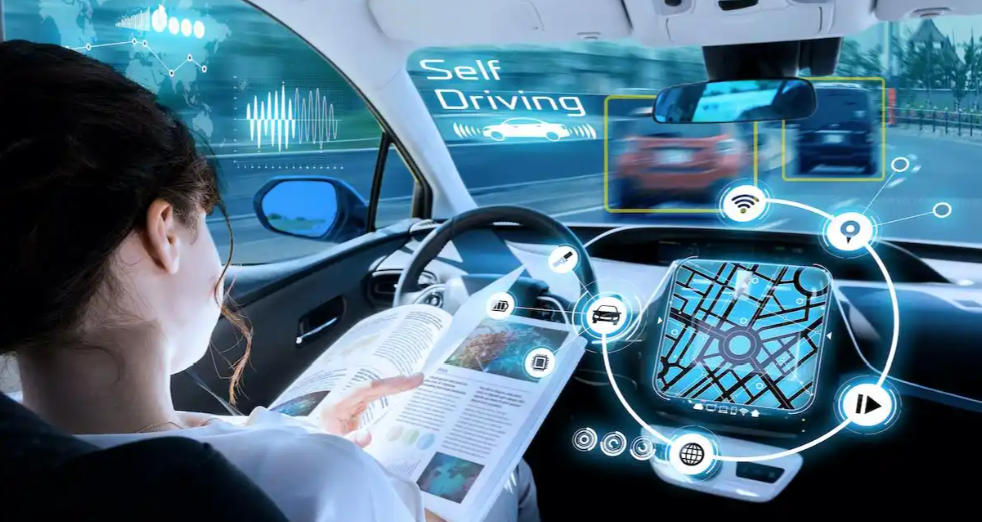
How Do ToF Sensors Make Autonomous Vehicles Safer and Smarter
With the global automotive industry rapidly advancing toward intelligent electrification and autonomous driving, three dimensional depth sensing technology has become a core element for safety and advanced driver assistance systems. Among various depth sensing solutions, Time of Flight sensors are leading a new generation of intelligent vehicle safety applications due to their high accuracy, fast response, and strong resistance to light interference.
What is Autonomous Driving
Autonomous driving refers to vehicles using onboard sensors, artificial intelligence, computing systems, and navigation algorithms to control steering, acceleration, and braking without human intervention from start to destination. Simply put, autonomous driving enables vehicles to drive themselves.
Key components include:
-
Environmental Perception – Using radar, LiDAR, cameras, and ToF sensors to detect roads, vehicles, pedestrians, and obstacles in real time.
-
Decision Making and Path Planning – AI systems analyze perception data to determine driving routes, speed control, and obstacle avoidance strategies.
-
Automatic Control – Vehicles automatically control steering, acceleration, and braking based on the planned route to ensure safe driving.
-
Intelligent Connectivity – Integration with V2X, cloud navigation, and traffic management systems provides more efficient and safer mobility experiences.

Automotive Demand for Advanced Depth Sensing
As autonomous driving and in cabin driver monitoring systems become more common, the automotive industry’s demand for high precision spatial awareness and real time environmental detection is growing rapidly.
Traditional radar and LiDAR perform well at long distance detection but have limitations in short distance accuracy, micro motion recognition, and in cabin monitoring.
More manufacturers are adopting 3D ToF camera modules, ToF depth cameras, and ToF sensors to achieve millimeter level distance measurement, millisecond level response, and all weather adaptability.
ToF sensors not only improve external detection accuracy for pedestrians and obstacles but also enable driver posture monitoring, fatigue detection, and gesture control inside the vehicle, significantly enhancing the safety and human machine interaction of intelligent driving systems.
Market research predicts that with the growth of advanced driver assistance and smart cockpit applications, the ToF sensor market will expand rapidly with a compound annual growth rate exceeding eighteen percent over the next five years, becoming one of the fastest growing segments of the three dimensional sensor market.
Leading three dimensional perception technology companies are actively developing automotive grade ToF modules. With lower costs and higher integration, more vehicles will be equipped with ToF systems, enabling a comprehensive intelligent driving experience.
Overall, ToF sensors have become a core perception solution for autonomous driving and driver monitoring systems due to their high accuracy, fast response, and strong interference resistance.

Core Applications of ToF Technology in Vehicles
With the rise of autonomous driving and smart cockpits, Time of Flight sensors, ToF three dimensional cameras, and ToF depth cameras play key roles in both external and internal vehicle perception, providing high precision real time data for advanced driver assistance systems and human machine interaction.
Environmental Scanning and Obstacle Detection
-
Pedestrian and Obstacle Detection – ToF three dimensional depth cameras measure distances to pedestrians, vehicles, and obstacles to provide accurate data for automatic emergency braking and adaptive cruise control.
-
Stable Detection in Low Light and Complex Lighting – ToF sensors perform reliably under night conditions, tunnels, strong sunlight, or shadowed environments.
-
Parking and Low Speed Assistance – Accurate distance measurement helps automatic parking, reversing, and blind spot monitoring to enhance safety.
Automotive grade ToF solutions balance distance detection, range, resolution, and low power consumption, making them ideal for vehicle integration.
In Cabin Driver Monitoring Systems
In cabin ToF cameras and depth sensors can accurately capture head position, gaze direction, and facial features to enable real time fatigue detection and distraction monitoring.
-
Light Adaptability – ToF sensors work reliably in sunlight, tunnels, and nighttime conditions.
-
Micro Motion Detection – Systems can identify small movements such as blinking, yawning, and nodding to trigger safety alerts.
-
AI Integration – Combined with deep learning models, ToF sensors can predict driver behavior and proactively enhance safety.
Smart Interaction and Occupant Monitoring
3D ToF modules are widely used in smart cabin systems to enable gesture control, occupant detection, and child presence detection.
-
Gesture Control – Drivers can adjust volume, climate, and navigation through hand gestures without touching the interface, providing a safer and more convenient interaction.
-
Occupant Monitoring – ToF cameras detect the number, posture, and position of passengers, optimizing airbag deployment, seat adjustment, and cabin environment.
-
Child Safety Protection – Systems can detect if children remain inside the vehicle and trigger alerts to prevent accidents.
These applications significantly enhance environmental awareness, safety, and user experience in modern vehicles.
ToF Specifications and Industry Challenges
Despite its advantages, deploying ToF sensors in vehicles faces multiple technical requirements and challenges.
Technical Specifications
-
Distance Accuracy – Automotive grade ToF sensors typically require accuracy within one centimeter to ensure precise detection of pedestrians, vehicles, and obstacles.
-
Response Time – Latency must be below five milliseconds to support automatic emergency braking and dynamic obstacle avoidance.
-
Ambient Light Immunity – Sensors must operate reliably under strong sunlight, tunnels, and nighttime conditions.
-
Operating Temperature – Wide temperature range from minus forty to plus one hundred five degrees Celsius is required for different climates.
-
Modular and Compact Design – ToF modules must be small enough to integrate into dashboards, rearview mirrors, roofs, or front radar systems while balancing range and resolution.
-
High Resolution and Field of View – High resolution is essential to detect small objects, occupant posture, and children accurately.
Industry Challenges
-
Cost Control – High resolution automotive grade ToF modules remain expensive, impacting overall vehicle cost.
-
Reliability and Standardization – Systems must comply with automotive functional safety standards, ensuring hardware, software, and algorithms meet strict certification.
-
Regulatory Compliance – Regional regulations require imaging accuracy, privacy protection, and occupant monitoring functions.
-
Environmental Challenges – Rain, snow, fog, dust, and reflective surfaces can affect ToF measurement, requiring sensor fusion and algorithm optimization.
-
Integration Complexity – Integrating ToF modules with ADAS, DMS, and smart cockpit systems demands precise hardware layout, real time processing, and data communication.
Thus, while ToF sensors offer significant benefits, optimizing cost, reliability, compliance, environmental adaptation, and system integration is essential for large scale deployment.

Market Trends and Competitive Landscape
The global market is currently dominated by a few semiconductor leaders, while local manufacturers are developing automotive grade 3D and ToF perception technology to accelerate domestic supply.
Market forecasts indicate that by 2030, the automotive ToF sensor market could exceed three billion dollars, covering ADAS, driver and occupant monitoring, smart cockpit, gesture control, and other applications.
With falling prices and improved reliability of solid state LiDAR, MEMS LiDAR, and mini automotive LiDAR, more mid to high end electric vehicles and autonomous cars will adopt ToF, LiDAR, AI, and sensor fusion architectures, accelerating smart vehicle adoption.
Recommendations for Automotive Suppliers and System Integrators
To maximize the benefits of ToF technology in intelligent vehicles, suppliers and integrators should:
-
Use automotive grade ToF sensor modules and 3D ToF cameras to ensure measurement accuracy and light resistance for ADAS and driver monitoring systems.
-
Combine AI, ToF, and edge computing to optimize real time object recognition and behavior prediction for autonomous driving, ADAS, and smart cabin systems.
-
Choose mature suppliers to ensure module reliability and production capacity while controlling costs.
-
Build robust software ecosystems including SDKs, algorithm libraries, and fusion platforms to support obstacle detection, driver monitoring, gesture interaction, and occupant detection.
-
Stay updated on ToF market trends, regulations, and safety standards to adjust strategies accordingly.
Conclusion — ToF Leading the New Era of Vehicle Perception
With AI, 5G, and ToF systems deeply integrated, vehicles will evolve from passive machines to intelligent partners capable of understanding their environment and making proactive decisions.
ToF sensors, 3D ToF cameras, and ToF depth cameras are becoming the visual core of intelligent vehicle systems, providing reliable foundations for autonomous driving safety, smart interaction, and comfort.
As technology advances and markets expand, future smart vehicles will likely integrate ToF, LiDAR, and multi sensor fusion systems, ushering in a safer, more efficient, and intelligent era of mobility.
IHawk Structured Light Camera P100E 8M

After-sales Service: Our professional technical support team specializes in TOF camera technology and is always ready to assist you. If you encounter any issues during the usage of your product after purchase or have any questions about TOF technology, feel free to contact us at any time. We are committed to providing high-quality after-sales service to ensure a smooth and worry-free user experience, allowing you to feel confident and satisfied both with your purchase and during product use.






Please upload banner from store admin blog pages