How TOF and LiDAR Fusion Enhance Short-Range and Long-Range Perception
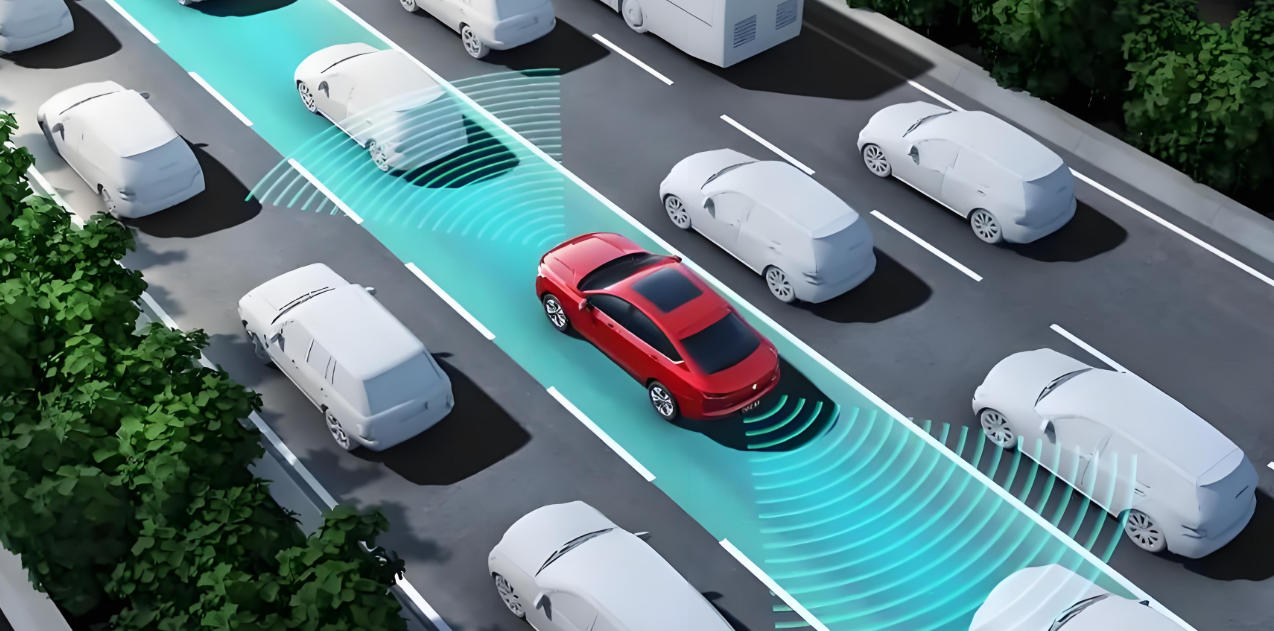
How Can TOF and LiDAR Fusion Improve Short-Range and Long-Range Perception in Autonomous Driving
With the rapid development of autonomous driving, vehicle perception has become a core factor in ensuring safety, efficiency, and intelligent decision-making. Currently, the most widely adopted perception solutions include cameras, millimeter-wave radar, LiDAR, and TOF (Time-of-Flight) sensors. Each technology offers unique strengths, but relying on a single sensor introduces limitations in short-range detection, long-range mapping, and dynamic obstacle recognition. Therefore, TOF–LiDAR fusion has emerged as a crucial innovation, enabling vehicles to achieve precise, robust, and comprehensive environmental perception.
What Is Autonomous Driving and Why Does Perception Matter
Autonomous driving refers to vehicles operating with minimal or no human intervention using sensor arrays, AI algorithms, control systems, and high-definition maps. In essence, it allows a car to 'see the environment, analyze it, and act,' performing tasks like obstacle avoidance, adaptive acceleration, and steering. According to SAE classification, autonomous vehicles are divided into levels L0–L5:
-
L0: Fully manual
-
L1: Driver assistance (e.g., cruise control)
-
L2: Partial automation (e.g., lane keeping)
-
L3: Conditional automation with limited handover
-
L4: High automation with minimal human intervention
-
L5: Full autonomy under all conditions
In these systems, environmental perception is the foundation for safe navigation. While cameras provide high-resolution images for lane detection, traffic sign recognition, and object classification, their performance drops in low-light or adverse weather. Millimeter-wave radar excels at measuring speed and distance but lacks fine obstacle detail. LiDAR creates accurate 3D point clouds for long-range mapping, but suffers blind spots in near-field detection and is costly. TOF sensors complement LiDAR by capturing high-precision near-field depth data, critical for detecting pedestrians, small obstacles, and low curbs in urban or parking scenarios.
Why TOF and LiDAR Are Complementary in Autonomous Driving
A single sensor cannot handle both short-range precision and long-range coverage. TOF sensors emit light pulses and measure return time, providing sub-centimeter accuracy for near-field obstacle detection. This is crucial for low-speed urban navigation, crowded streets, or underground parking where small objects, pedestrians, and cyclists appear suddenly. TOF is less sensitive to lighting changes than cameras, maintaining reliable 3D depth perception.
LiDAR excels at long-range scanning, constructing global 3D maps over hundreds of meters. It identifies distant vehicles, pedestrians, and road boundaries, enabling timely decision-making on highways. Its resistance to rain, fog, and low visibility ensures reliable environmental mapping in challenging conditions.
By combining TOF and LiDAR, vehicles achieve multi-layered perception: TOF fills LiDAR’s blind spots, while LiDAR ensures far-field coverage. Through AI-assisted sensor fusion, the system cross-validates data, improving obstacle detection accuracy, trajectory prediction, and dynamic object tracking, ensuring near-zero blind spots for autonomous vehicles.
Fusion Algorithms and Intelligent Data Processing
TOF–LiDAR fusion requires more than hardware integration; it relies on multi-source data processing, time synchronization, and advanced AI algorithms. TOF captures high-resolution near-field point clouds, while LiDAR provides dense long-range 3D data. Fusion algorithms align both datasets, creating rich 3D environmental models with fine-grained detail close to the vehicle and full-range coverage.
Semantic labeling and obstacle classification improve dynamic decision-making. Machine learning classifiers distinguish between moving pedestrians, stationary objects, cyclists, or road debris. Trajectory prediction and path planning are enhanced with Kalman filtering, Bayesian estimation, and deep learning, enabling real-time response, emergency braking, and evasive maneuvers.
Applications Across Autonomous Vehicles and Delivery Robotics
Autonomous vehicles use TOF–LiDAR fusion in urban streets, highways, tunnels, and congested traffic scenarios. TOF captures near-field details such as pedestrians and small obstacles, while LiDAR enables long-range detection of vehicles and road boundaries. This dual-layer system improves collision avoidance, navigation safety, and smooth driving.
In unmanned delivery vehicles, TOF sensors detect nearby packages or pedestrians, while LiDAR provides route planning and long-range mapping. Complex scenarios like underground parking, congested urban areas, or poor lighting require TOF–LiDAR fusion to ensure reliable environmental awareness.
Future Trends in TOF–LiDAR Fusion
Advances in sensor hardware, AI algorithms, and computing power will drive the next generation of autonomous driving. Smaller, energy-efficient TOF sensors and cost-effective solid-state LiDAR will reduce barriers for mass deployment. Transformer-based AI models and multimodal fusion networks enhance detection accuracy and robustness.
Future vehicles will integrate TOF–LiDAR fusion with V2X communication, cloud computing, and smart city infrastructure. Global perception, predictive hazard detection, and adaptive navigation will become standard, enabling fully autonomous L4/L5 intelligent vehicles.
Conclusion
TOF–LiDAR fusion is revolutionizing autonomous driving perception, combining near-field precision with long-range mapping. With AI integration, advanced fusion algorithms, and real-time dynamic tracking, this technology provides safer, smarter, and more reliable autonomous navigation. TOF–LiDAR sensor fusion is poised to become a cornerstone for the next generation of fully autonomous intelligent vehicles and smart mobility ecosystems.
Vzense DS86 & DS87 ToF 3D Cameras - Industrial Grade, High Precision,5m1600*1200

After-sales Service: Our professional technical support team specializes in TOF camera technology and is always ready to assist you. If you encounter any issues during the usage of your product after purchase or have any questions about TOF technology, feel free to contact us at any time. We are committed to providing high-quality after-sales service to ensure a smooth and worry-free user experience, allowing you to feel confident and satisfied both with your purchase and during product use.






Please upload banner from store admin blog pages