How to Use Touchless Gesture Control for Smart Home Devices in AnyRoom
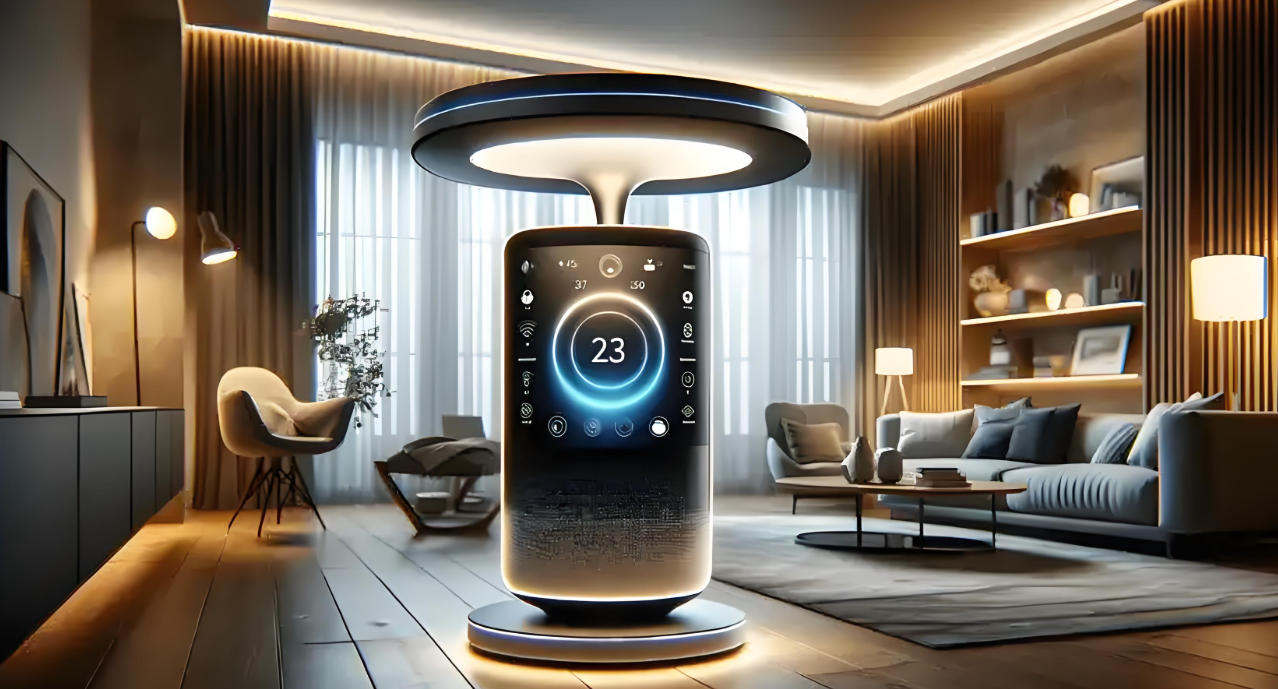
A Complete Guide to TOF Gesture Control & Next-Gen Smart Home Interaction
With the rapid advancement of smart home ecosystems, users expect more intuitive, convenient, and hygienic ways to interact with home devices. Traditional control methods—buttons, remotes, and even mobile apps—are gradually becoming inefficient in modern living scenarios. Meanwhile, voice assistants, though popular, often suffer from misrecognition and noise interference.
As the demand for contactless, seamless interaction rises, TOF (Time-of-Flight) depth-sensing technology brings a groundbreaking upgrade to smart home control. Combined with gesture recognition, TOF allows users to operate devices in the kitchen, living room, or bedroom without touching anything, offering a cleaner, faster, and more natural smart home experience.
This article explores how TOF reshapes smart home interaction, the benefits of gesture control, and future trends such as intelligent spatial perception and digital-twin homes—while integrating high-ranking keywords like 'smart home gesture control,' 'touchless control,' '3D depth sensing,' and 'smart kitchen automation.'
1. What Is Gesture Control in Smart Homes?
Gesture control refers to operating smart devices through hand or body movements detected by sensors—without the need for physical touch, remotes, or even voice commands.
In practical terms, users can simply wave, swipe, or perform predefined gestures to control home appliances:
-
Wave to turn lights on/off
-
Swipe upward to increase TV volume
-
Rotate your hand to adjust air conditioning temperature
-
Make a pushing gesture to close curtains
Core Benefits of Gesture Control
✔ Touchless & Hygienic: Ideal for kitchens (oily/wet hands), bathrooms, or public spaces
✔ Hands-free: Control devices while cooking, cleaning, or carrying items
✔ Faster & more intuitive: No need to find remotes, press buttons, or open apps
✔ High engagement: Feels futuristic and effortless
In a smart kitchen, for example, simply waving above the countertop can control the range hood, cabinet lighting, or smart faucets—enhancing both convenience and hygiene.

2. What Is TOF (Time-of-Flight) Technology and How Does It Work?
TOF (Time-of-Flight) is a cutting-edge depth-sensing method that measures the time light takes to travel to an object and back. Unlike traditional cameras, a TOF sensor directly captures 3D spatial data, enabling precise motion tracking and gesture recognition.
How TOF Works
-
The TOF sensor emits infrared light pulses.
-
Light hits objects and reflects back to the sensor.
-
The system calculates distance based on the return time.
-
Multiple measurements generate a real-time 3D depth map.
Why TOF Is Important for Smart Homes
-
Provides millimeter-level accuracy
-
Works in complete darkness
-
Resistant to ambient light, smoke, steam, and reflections
-
Offers privacy-friendly depth data instead of video images
-
Ideal for AI-based gesture recognition and human detection
Popular Applications
-
Gesture-controlled smart home devices
-
Smart TVs and home entertainment systems
-
Air conditioners and refrigerators with touchless controls
-
Security systems with accurate human detection
-
AR/VR headsets, 3D scanning, and robot navigation
High-search keywords included: ToF sensor, 3D depth camera, smart home automation, gesture control home devices, touchless kitchen control.
3. Current Limitations of Smart Home Interaction
Even with IoT and AI adoption, many smart home systems still feel unintuitive due to outdated interaction methods.
Touch Panels & Remote Controls
-
Require physical contact
-
Easily soiled in kitchen/bathroom environments
-
Lack real “smart” experience
Mobile Apps
Popular but inconvenient for frequent operations:
Unlock phone → open app → find device → adjust settings
This is inefficient for actions like turning lights on/off or adjusting temperature.
Voice Assistants
Voice control (Alexa, Google Assistant, XiaoAI) is common yet limited:
-
Misrecognition of commands
-
Background noise interference
-
Dialect/accent issues
-
Slow response or false triggers
For example, in a noisy kitchen with running water and exhaust fans, voice commands may fail repeatedly. These limitations reduce user trust in voice-only solutions.
4. TOF Enables True Touchless Smart Home Control
TOF technology solves the fundamental weaknesses of voice and touch systems by offering real-time, precise 3D gesture recognition.
1. Accurate Gesture Recognition
TOF supports various natural gestures:
-
Wave → Turn lights on/off
-
Swipe Up/Down → Adjust audio or TV volume
-
Push/Slide Gesture → Open or close smart curtains
-
Rotate Gesture → Switch air conditioner modes
These gestures require no learning, making smart homes more intuitive.
2. Works in Harsh Environments
Touchless TOF control is ideal for:
-
Kitchens: smoke, steam, wet/dirty hands
-
Bathrooms: humidity & water droplets
-
Bedrooms at night: complete darkness
-
Living rooms with multiple people
TOF uses light pulses—not audio—so noise does not affect performance. It’s stable even in low-visibility scenarios.
3. Natural and Immersive Interaction
Users don’t need to memorize command phrases or navigate complex menus.
The system understands motion naturally, creating a fluid and human-friendly smart home experience.

5. Security & Privacy Advantages of TOF Smart Homes
Privacy is a serious concern for smart home users. Traditional RGB cameras can capture faces and home interiors, creating potential risks.
TOF provides superior privacy protection:
No Video Recording
TOF sensors output:
-
Depth maps
-
Point cloud data
-
Silhouette information
No identifiable images of faces or rooms are captured.
Local Processing
TOF data can be processed locally on the device, minimizing cloud transmission and cybersecurity risks.
This makes TOF ideal for families, elderly care environments, children’s rooms, and privacy-sensitive users.
6. TOF + IoT + AI: Building a Connected Smart Ecosystem
TOF becomes far more powerful when integrated with AI algorithms and IoT platforms.
Huawei Smart Screen Example
-
TOF sensors detect hand gestures for navigation
-
Auto-adjust brightness and sound based on distance
-
Integrates with lights, curtains, and speakers via full-home IoT links
Samsung Smart Appliances
-
TOF-powered refrigerators detect presence
-
Contactless air conditioner control
-
Hygienic interaction for high-use appliances
AI-Enhanced Smart Scenes with TOF
When the user enters the living room:
-
Lights softly illuminate
-
AC adjusts airflow direction toward or away from the user
-
Background music activates
-
Curtains automatically open/close based on brightness
TOF enables precise motion tracking and context-aware automation, elevating smart homes from device-based operations to space-level intelligence.

7. Future Trends: From Smart Devices to Intelligent Spaces
TOF is not just a gesture sensor—it is the spatial perception foundation of next-generation smart homes.
1. Digital Twin Homes
Deploying multiple TOF sensors creates a real-time 3D model of the home.
This enables:
-
Adaptive lighting
-
Dynamic air conditioning airflow
-
Real-time occupancy detection
-
Child and elderly safety alerts
2. Predictive Behavior & Habit Learning
AI can analyze TOF spatial data to:
-
Detect bedtime routines
-
Automatically prepare sleeping environments
-
Detect falls in elderly care
-
Adjust HVAC based on user’s position
3. Seamless Contactless Interaction
Future smart homes will no longer rely on:
-
Keyword voice commands
-
Remote controls
-
Manual switching
Instead, the environment responds proactively, based on user presence, gestures, distance, and behavior.
4. Cross-Domain Expansion
TOF will play an important role in:
-
Smart security
-
Elderly care monitoring
-
Indoor navigation
-
AR/VR entertainment
-
Smart office environments
Smart homes will evolve from single-device control to holistic, intelligent living spaces.
Conclusion
TOF-based gesture control marks a major leap in smart home interaction. With powerful 3D depth sensing, real-time spatial awareness, and privacy-friendly data processing, TOF solves the weaknesses of traditional touch and voice controls. It brings intuitive, hygienic, and contactless operation to kitchens, living rooms, bathrooms, and whole-home environments.
As TOF, AI, and IoT continue to advance, smart homes will shift from devices waiting for human input to spaces that actively understand and assist users, delivering a more natural, intelligent, and immersive lifestyle.
Robosense 32-line 3D LiDAR sensor RS-Helios-5515 unmanned ranging navigation obstacle avoidance V2R RS-Helios-1615 Laser radar

After-sales Support:
Our professional technical team specializing in 3D camera ranging is ready to assist you at any time. Whether you encounter any issues with your TOF camera after purchase or need clarification on TOF technology, feel free to contact us anytime. We are committed to providing high-quality technical after-sales service and user experience, ensuring your peace of mind in both shopping and using our products.






Please upload banner from store admin blog pages