How Do TOF Cameras Improve XR/VR Immersion and 3D Gesture Interaction?
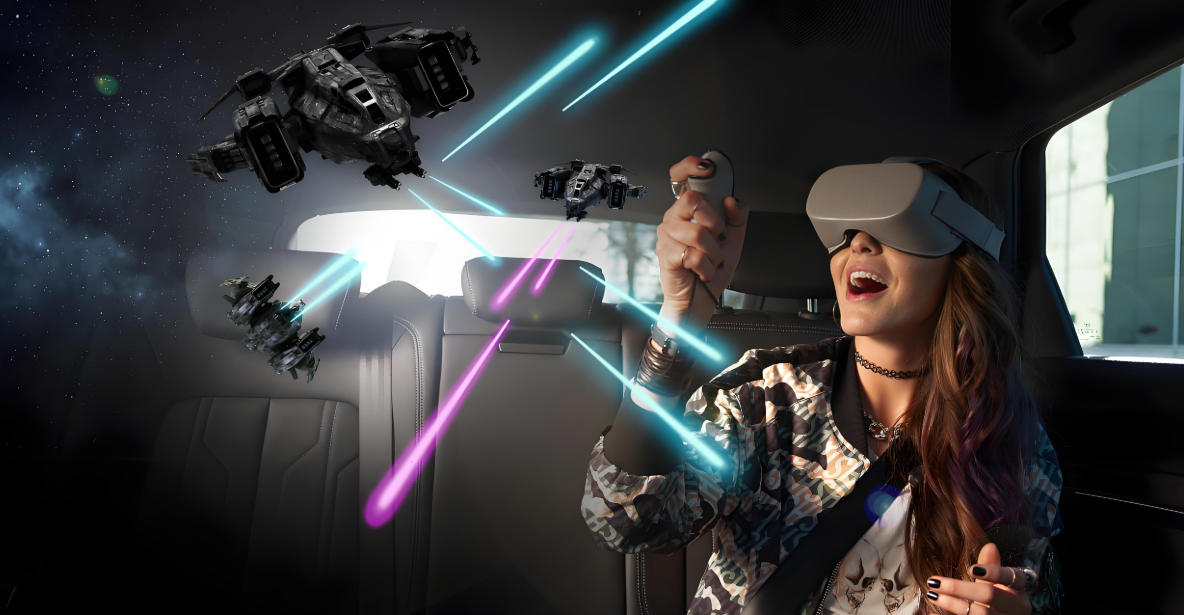
Enhancing XR/VR Immersion Through TOF Technology: Precise 3D Spatial Mapping and Gesture Interaction
In the rapidly growing XR (Extended Reality) and VR (Virtual Reality) industry, achieving realistic immersion relies on precise spatial perception, low-latency gesture tracking, and seamless multi-user interaction. Traditional visual tracking and inertial measurement units (IMUs) often struggle with alignment, latency, and occlusion issues, limiting user experience. TOF (Time-of-Flight) technology, with its millimeter-level depth sensing and rapid response, is transforming XR/VR devices, enabling immersive environments that interact naturally with real-world spaces.
Understanding XR, VR, and AR
XR, VR, and AR (Augmented Reality) all offer immersive experiences but differ in scope:
-
Augmented Reality (AR)
-
Definition: AR overlays virtual objects onto the real world, blending real and digital elements.
-
Features: Users retain awareness of their surroundings, with virtual additions providing context or interactivity.
-
Applications: AR gaming, furniture placement previews, navigation overlays, and AR-assisted education.
-
-
Virtual Reality (VR)
-
Definition: VR fully immerses users in a digital environment, isolating them from the real world.
-
Features: Head-mounted displays (HMDs) provide visual, auditory, and haptic feedback for complete immersion.
-
Applications: VR gaming, simulations, virtual tourism, and training scenarios.
-
-
Extended Reality (XR)
-
Definition: XR combines AR, VR, and MR (Mixed Reality) technologies to deliver flexible and multi-dimensional immersive experiences.
-
Features: Allows simultaneous interaction with virtual and real elements, supporting cross-platform applications.
-
Applications: Enterprise collaboration, remote teaching, industrial design, and immersive training simulations.

-
Challenges in XR/VR Immersion
Despite technological progress, XR/VR devices face persistent challenges:
-
Inaccurate spatial perception: Drift and misalignment of virtual objects reduce realism.
-
Gesture tracking latency: Delays in hand or body motion recognition disrupt interaction flow.
-
Multi-user synchronization: Collaborative XR experiences are hindered when avatars or actions fall out of sync.
-
Environmental adaptation: Dynamic lighting, moving objects, and occlusion can destabilize virtual overlays.
These pain points limit the potential of XR/VR for gaming, training, remote collaboration, and industrial simulations.
How TOF Technology Addresses Immersion Issues
Time-of-Flight (TOF) sensors measure the travel time of light pulses to generate high-precision 3D depth maps. When integrated into XR/VR devices, TOF technology resolves key limitations in spatial perception, gesture tracking, and multi-user collaboration.
-
Real-Time 3D Spatial Mapping
-
TOF enables millimeter-accurate depth sensing, ensuring virtual objects align perfectly with real environments.
-
Supports complex scenes with varying light conditions, reflective surfaces, and dynamic movements.
-
Updates spatial data in real time for adaptive virtual content placement.
-
-
Gesture Tracking and Natural Interaction
-
Captures single or multi-hand movements, including finger bending, rotation, and sliding.
-
AI-powered algorithms combine with TOF depth data for low-latency, precise gesture recognition.
-
Enables multi-dimensional interactions such as virtual object manipulation, AR navigation, and immersive gaming controls.
-
-
Enhanced Environmental Adaptation
-
TOF handles partial occlusion and maintains stable virtual object positions.
-
Supports multi-user environments, accurately capturing each participant’s spatial movements.
-
Improves realism and engagement by integrating virtual content seamlessly into real spaces.
-

Application Scenarios
-
XR Gaming: Full-room tracking allows users to interact naturally with virtual objects.
-
Virtual Try-On & Home Design: TOF maps furniture and room layouts for accurate AR placement.
-
Education & Training: Surgical simulations, lab exercises, and industrial training benefit from precise spatial mapping.
-
Enterprise Collaboration: Synchronizes multiple users’ movements for effective remote teamwork.
Achieving Full Immersion
TOF technology enables XR/VR devices to achieve:
-
Multi-user collaboration: Synchronized avatars and gestures allow natural group interactions.
-
Full-space interaction: Users can manipulate virtual objects throughout a 360° environment.
-
Dynamic environment adaptation: Real-time depth updates allow virtual objects to respond to environmental changes automatically.
Industry Applications and Success Stories
-
VR Entertainment & Social Interaction
-
Devices like Meta Quest integrate TOF for real-time hand tracking, improving gaming immersion and multi-user engagement.
-
Multiplayer VR games benefit from synchronized spatial tracking, enhancing realism and interaction flow.
-
-
Enterprise Training & Education
-
Industrial simulations and medical education leverage TOF for accurate gesture recognition and safe virtual operation.
-
Remote classrooms and training programs utilize TOF sensors for immersive learning experiences.
-
-
Results & Benefits
-
TOF reduces error rates in simulations by 20–30% while improving efficiency.
-
Enhances safety in training by replacing high-risk physical operations with precise virtual alternatives.
-
Provides competitive advantages for XR/VR developers by enabling richer interaction and immersive experiences.

-
Future Trends in TOF + XR/VR
-
AI Integration: Predictive gesture recognition, personalized interaction, and dynamic scene adjustments.
-
Ultra-Low Latency & High Frame Rate: 5G and edge computing reduce response times for real-time immersive experiences.
-
Holographic & Cloud XR: Accurate spatial mapping supports remote collaboration, holographic displays, and shared virtual environments.
-
Cross-Scenario Expansion: Applications extend to healthcare, industrial operations, education, remote work, and entertainment.
-
Full-Sensory Immersion: Integration with haptics and spatial audio for a more realistic, multi-sensory virtual experience.
Conclusion
TOF technology is revolutionizing XR/VR experiences by providing precise 3D spatial mapping, low-latency gesture tracking, and enhanced multi-user collaboration. From gaming and AR applications to enterprise training and remote collaboration, TOF sensors enable highly immersive, realistic, and interactive virtual environments. As the technology evolves alongside AI, 5G, and cloud XR platforms, TOF will become an essential core of the next generation of XR/VR devices, creating a future of seamless, intelligent, and fully immersive experiences.
SLAMTEC RPLIDAR A3M1 360° LiDAR Sensor 25M Range, 16000 Samples

After-sales Support:
Our professional technical team specializing in 3D camera ranging is ready to assist you at any time. Whether you encounter any issues with your TOF camera after purchase or need clarification on TOF technology, feel free to contact us anytime. We are committed to providing high-quality technical after-sales service and user experience, ensuring your peace of mind in both shopping and using our products.






Please upload banner from store admin blog pages